
They really do roll up the sidewalks
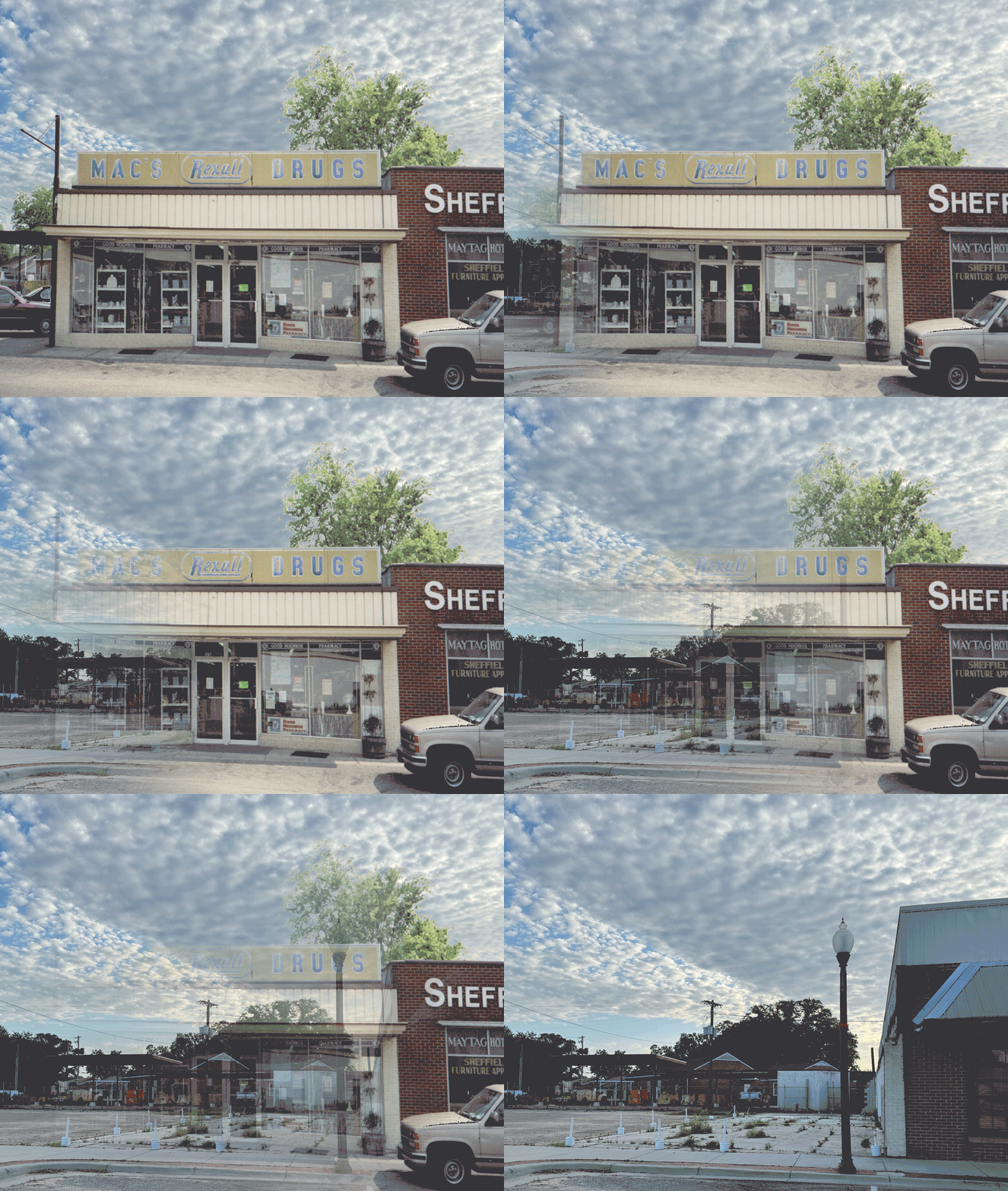
More than a quarter-century ago, I loaded my pickup with cheap, self-assembled furniture and plastic tubs full of baggy clothes and gifted towel sets, and made one of dozens of three-hour trips to Auburn. The same summer, my high-school employer Mac's Drugs vacated its then-longest home on Kimball Avenue, a thoroughfare whose foot traffic had outlasted that of the more established Commerce Street.
Early last year, I drove another pickup truck four days total to pack a hard drive full of digital images — pictures new and old, deeds, maps and newspaper clippings that together tell a story of my family's and my hometown's history that feels as distant now as the civic optimism that once invigorated Jackson's editorials and political races.
I spent the first week of that Southern visit in a loft apartment at the center of town, anchoring the curve in Commerce Street where business and residence once met, perched behind traffic signals and gazing down thoroughfares once bustling with foot, bicycle and vehicle traffic.
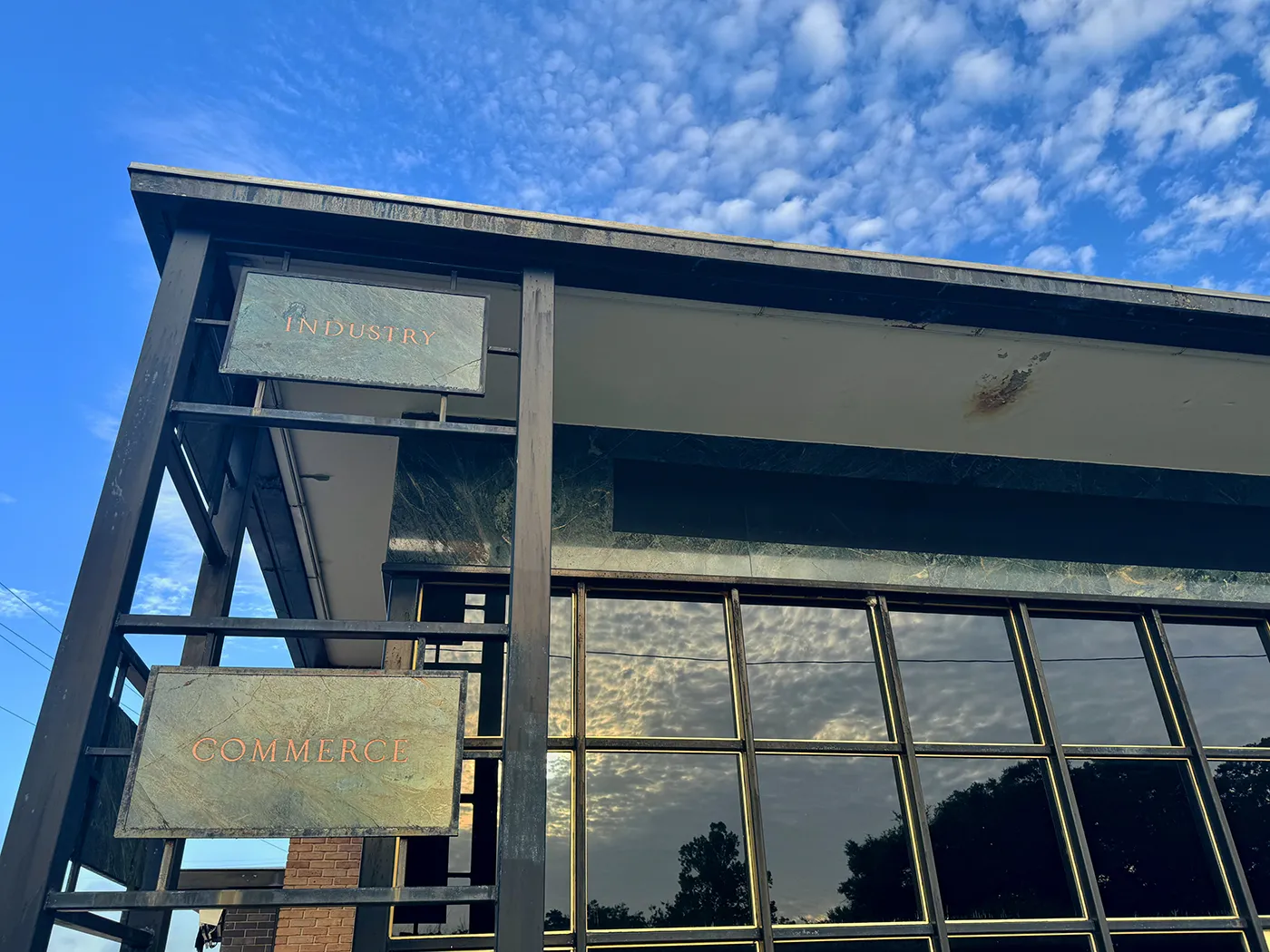
Outside my loft stood a bank building that once was a beautiful example of modernism-meets-Mobile — a flat roof and front facade of towering glass and breeze block welcomed the town’s merchants into a brick lobby tastefully if incongruously peppered with lacy wrought iron. The upper walls of the lobby bore photographic murals of the town’s dependence on timber, toned in the shade of pine needles and money. On my visit, that empty building was up for auction, its breeze blocks decades removed while its marble cornerstones exalt an ironic hope for development, progress and expansion.
Central time awoke me at hours my father would have found scoffable during my teen years (honestly, likely through my thirties), and I promptly followed the sunrise with downtown walks and drone flights. I repeated the exercise in the afternoon, a conspicuous figure disregarded in plain sight as I followed a drone around town and into the riverbottom in straw hat cradling a cigar, like an indiscreet mobster scouting new body-dumping territory.
As with an older relative with whom you reacquaint decades later, time and disuse can show surprising wear on a beloved building, street or, in this case, an entire district. Downtown Jackson is occupied by the ghosts of once-bustling stores haunting empty lots, their familiar tiles once worn to a sheen by decades of wax and patronage now dull and brittle after a single summer of direct Alabama sunlight.
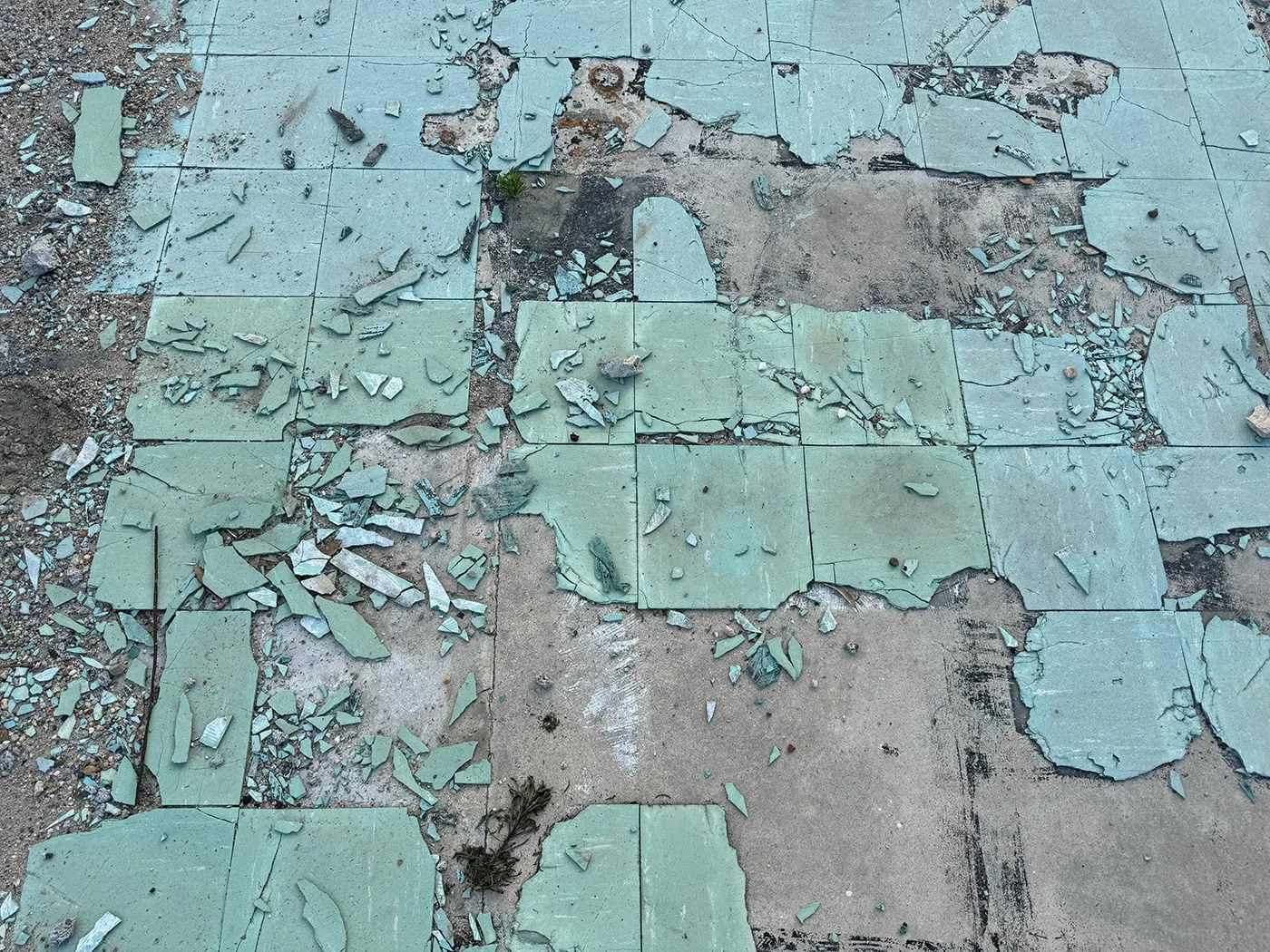
I stood on those tiles on an overcast day, trying in vain to sniff out in Proustian fashion the faintest hint of the commerce once conducted in the drugstore above: The freon greeting from the whirring antique Coke box I refilled first thing after school. The soft, musty buzz of dust baking on fluorescent bulbs. A register full of first-of-the-month cash and the dot-matrix din of end-of-the-month statements. Old-lady face powders and young-lady perfumes. The bakery's coffee-laced brownies. Greer's butter-baked chicken. Saturday morning's first pot of coffee. The nurses' cigarette breaks following them across Kimball from the doctors office. The sawdust and sweat soggying the sinewy forearms of aged sawmill workers.
Finding none of these, my senses instead resigned into the sour stink of the paper mill under the hill, the lack of an olfactory chorus a reminder of the increasing singularity of downtown’s fortunes. They say you can never go home again. They also say to avoid clichés like the Plague.
Working downtown, I had experienced the core of the business district at its last breaths, when elderly, pedestrian Jacksonians could still handle all their business from their ancestral homes a short walk away. After Mac’s moved and Greer’s closed, any buzz the district had sustained quickly quieted as errands began their shift to automotive stop-and-go affairs stretching up the highway toward the new Wal-Mart.
Just north of that development, another parcel of a property known since the early years of Reconstruction as the McVay place has since been lost to the encroaching footprint of an ATV dealer, deleting all physical evidence of its decades of domesticity. My grandfather’s house was saved from destruction, moved to a red-dirt subdivision to regardlessly rot in the woods. The property’s twisty trees, grown-over dog pen, bamboo jungle, corn crib and concrete cistern conversely dwell in memory alone.